Blog Post #5
Practical EdTech for Learning
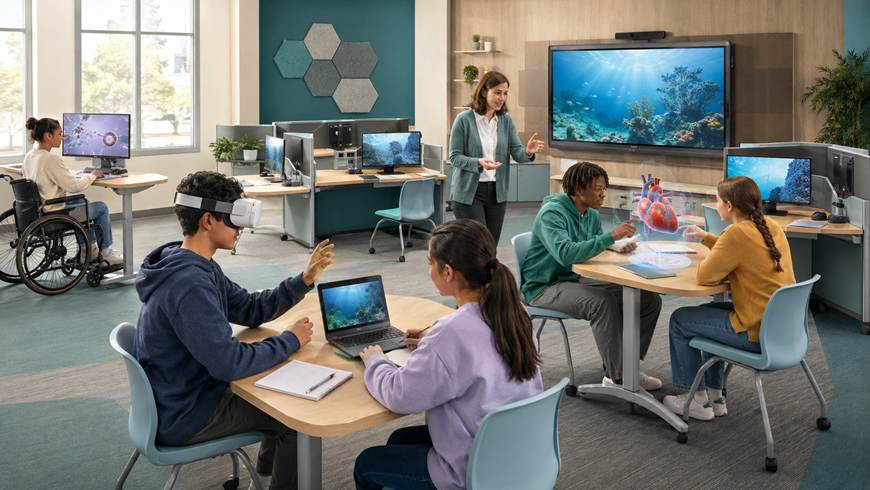
Figure 1. AR/VR learning in a flexible computer lab. Original image created for this post.
A small number of VR headsets, say five, in a school lab can be assigned a clear role with a careful rotation plan. My idea is to put VR and AR in the flexible computer lab, which was designed in Module 1, rather than making a separate room. Science students will be given short virtual simulations to test one variable at a time and then explain the result with a partner. In a review of 29 experiments, Hamilton et al. (2021) concluded that most of the studies they reviewed showed an educational benefit from immersive VR. Weak retention measures were also reported in most of the evidence in the same review. That is why all of my headset sessions conclude with a written explanation. Short 360-degree field trips will provide additional access to locations like coral reefs or historical sites. Students will have two prompts to observe and will have one claim based on evidence to state when they leave. The lab becomes a creative place with AR. Learners will create a short story using a class text. A science group could mark a digital model. The completed work is displayed on an interactive screen. The five headsets will be used in the current pods, and Chromebooks will be available to partners outside VR. Lui et al. (2023) discovered that reflection and a decrease in cognitive load enhanced the immersive science lesson design. My plan is based on those findings in short sessions and simple directions. There is a 2-D version of each graded activity. This way, access is fair, and the school’s emerging-technology budget has a clear purpose of instruction.
References
Hamilton, D., McKechnie, J., Edgerton, E., & Wilson, C. (2021). Immersive virtual reality as a pedagogical tool in education: A systematic literature review of quantitative learning outcomes and experimental design. Journal of Computers in Education, 8, 1–32. https://doi.org/10.1007/s40692-020-00169-2
Lui, A. L. C., Not, C., & Wong, G. K. W. (2023). Theory-based learning design with immersive virtual reality in science education: A systematic review. Journal of Science Education and Technology, 32, 390–432. https://doi.org/10.1007/s10956-023-10035-2
 Allen Castaneda
Leave a comment