Final Ultimate Computer Lab Proposal | Blog Post #7
Imagine a computer lab where the room itself helps students learn. My revised Ultimate Computer Lab proposal does exactly that while responding to a required $10,000 budget reduction. Instead of treating technology as a collection of devices, the $50,000 plan treats the lab as a flexible learning environment built around access, collaboration, accessibility, and purposeful technology use.
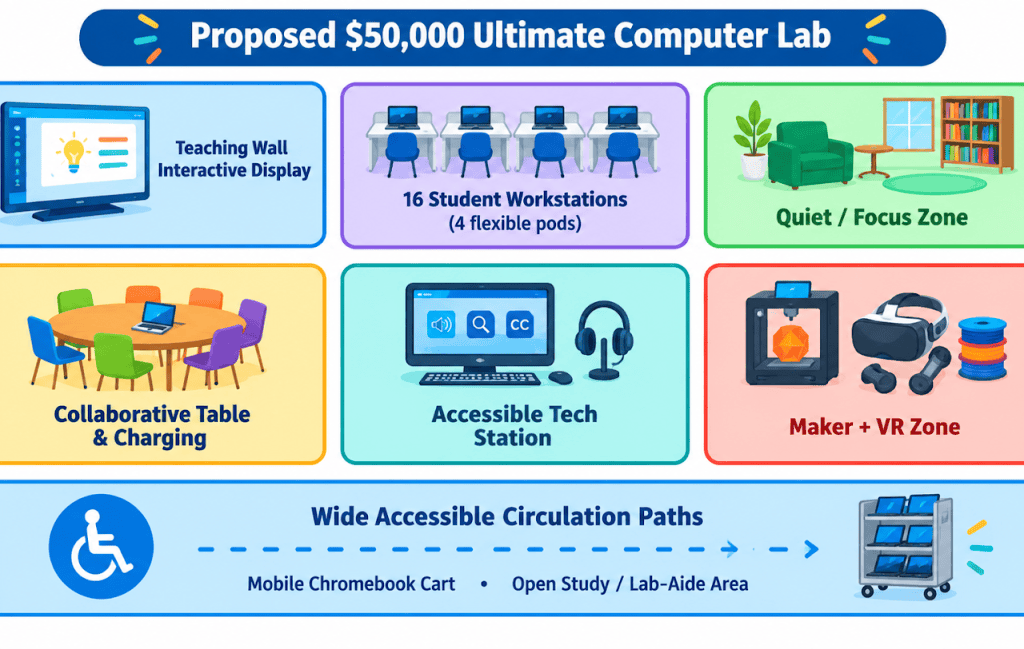
The revised design includes 16 desktop workstations, a mobile cart with 10 Chromebooks, height-adjustable desks, ergonomic seating, an interactive teaching display, a document camera and video-conferencing kit, an assistive technology station, upgraded wireless infrastructure, and a smaller but meaningful VR and 3D-printing area. The budget protects accessibility and network reliability while reducing quantities in areas that can be shared, rotated, or used less frequently.
Accessibility is built into the room rather than added later. Wide circulation paths, adjustable furniture, a quiet/focus zone, screen-reading and magnification tools, alternative keyboards, and captioning support give learners multiple ways to access instruction and participate. The design is informed by Universal Design for Learning and by current accessibility guidance.
I am especially interested in connecting with instructional technologists, educators, accessibility professionals, and IT colleagues who have experience implementing flexible computer labs. What features have made the biggest difference in your setting? How have you measured whether a technology-enhanced space actually improves learning and access?
If you are working on a similar project, I would welcome examples, lessons learned, accessibility recommendations, and practical strategies for managing limited budgets. My goal is not simply to build a modern room. It is to build a space that educators can use confidently and that students can access without unnecessary barriers.
Let’s compare ideas, share evidence, and improve the design together. A strong computer lab should be a shared professional learning project—not just a purchasing list.


Leave a comment